
National Eating Disorders Awareness Week: Why It Matters — Especially in Athletes
Healthy with Hollin LLC
By Hollin Paige Thompson, MS, RD, LD — Founder, Healthy with Hollin LLC
In my work as a Sports Dietitian, I have worked closely with athletes navigating disordered eating habits, chronic underfueling, and full on eating disorder diagnoses. I have seen firsthand how easily performance goals can blur into harmful patterns for some— and how often these struggles go unnoticed in athletics.
Every year, National Eating Disorders Awareness Week (NEDAW), led by the National Eating Disorders Association (NEDA), brings attention to a serious — and often misunderstood — group of mental health conditions that frequently go unseen and unsupported.
But this week is more than a hashtag.
It’s about recognizing the signs early.
It’s about reducing stigma.
And it’s about protecting both health and performance — especially in athletes.
Sport can build confidence, resilience, teamwork, and physical strength. But it can also come with unique pressures: expectations to excel, perfectionistic tendencies, weight standards, body composition goals, and performance comparisons.
When performance becomes tied to body size or food control, risk increases.
Athletes experience eating disorders at higher rates than the general population — and many cases go undetected.
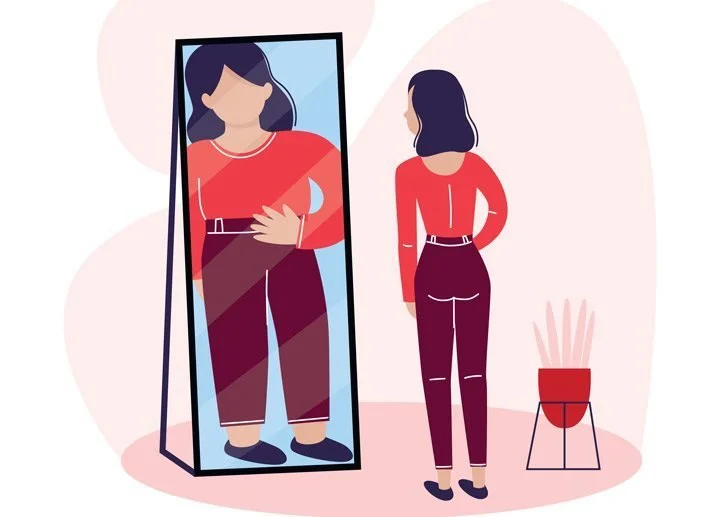
Eating Disorders Don’t Have a “Look”
Eating disorders affect 30 million Americans — and they do not discriminate.
They affect people of all:
Body sizes
Ages
Genders
Ethnic backgrounds
Athletic levels
You cannot determine who is struggling by appearance alone.
In fact, many athletes with disordered eating are praised for their “discipline,” “clean eating,” or “commitment” — when in reality, they may be underfueling, overtraining, or silently battling rigid food rules.
This isn’t always obvious. And it isn’t always intentional.
Why Athletes Are at Higher Risk
Certain sport environments elevate vulnerability, including:
Weight-class or aesthetic sports
Pressure to change body composition
Injury and return-to-play periods
Off-season weight fluctuations
Social media comparison culture
Coaching or team commentary around weight
Chronic underfueling can lead to relative energy deficiency in sport (REDs) aka low energy availability, which may present as:
Persistent fatigue
Decreased performance
Recurrent or slow-healing injuries
Hormonal disruption
Bone stress injuries
Mood changes
Menstrual irregularities
What may begin as “eating healthier” can gradually shift into restriction, fear around food, or rigid control.
The Performance Connection: Fuel Is Not Optional
As a Sports Dietitian, I remind the athletes I work with that on this brief overview regarding calories and nutrition:
Calories give us fuel.
Carbohydrates give us energy.
Fat supports hormone health.
Protein supports repair and recovery.
ALL macronutrients matter.
Restriction does not enhance performance.
Inadequate fueling compromises:
Power
Endurance
Recovery
Focus
Immune function
An athlete cannot out-train undernutrition.
Warning Signs to Watch For
Skipping meals regularly
Anxiety around team meals
Eliminating entire food groups
Obsessive macro tracking
Frequent injuries
Weighing self continuously
Dramatic weight fluctuations
Withdrawal from social situations involving food
These behaviors are not “dedication.” They are red flags.
Early intervention significantly improves outcomes.
Moving Toward Awareness and Support
National Eating Disorders Awareness Week is a reminder that:
Struggling is not weakness
Asking for help is strength
Support systems matter
Nutrition education should empower — not restrict
If you know someone who may be struggling — an athlete, teammate, client, or family member — say something. Support matters more than silence.
Screening tools and resources are available through the National Eating Disorders Association.
Awareness saves lives.
And proper fueling supports both health and performance — on and off the field.
